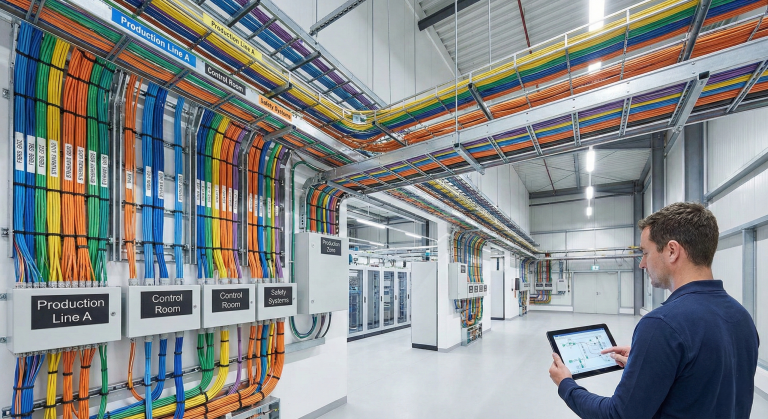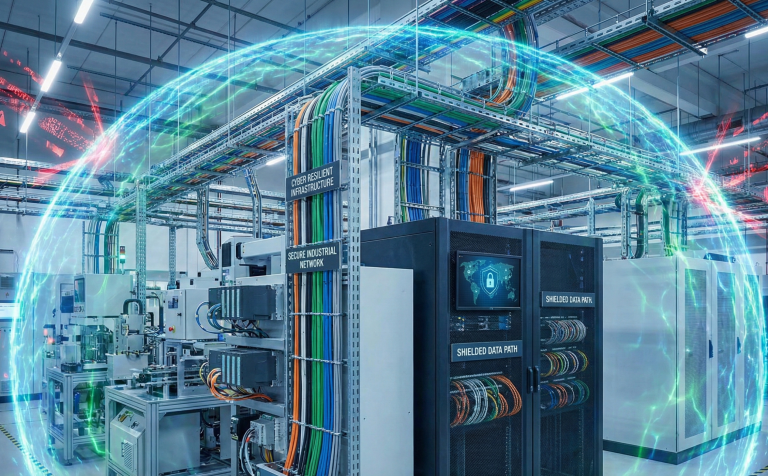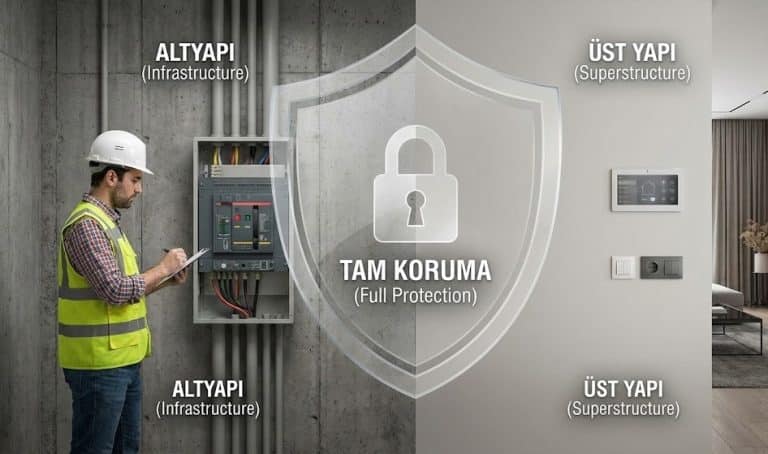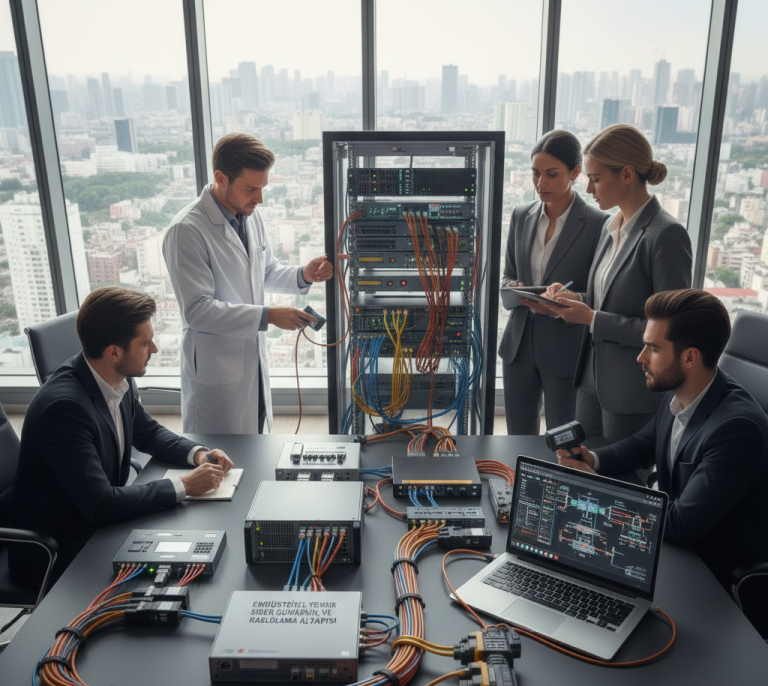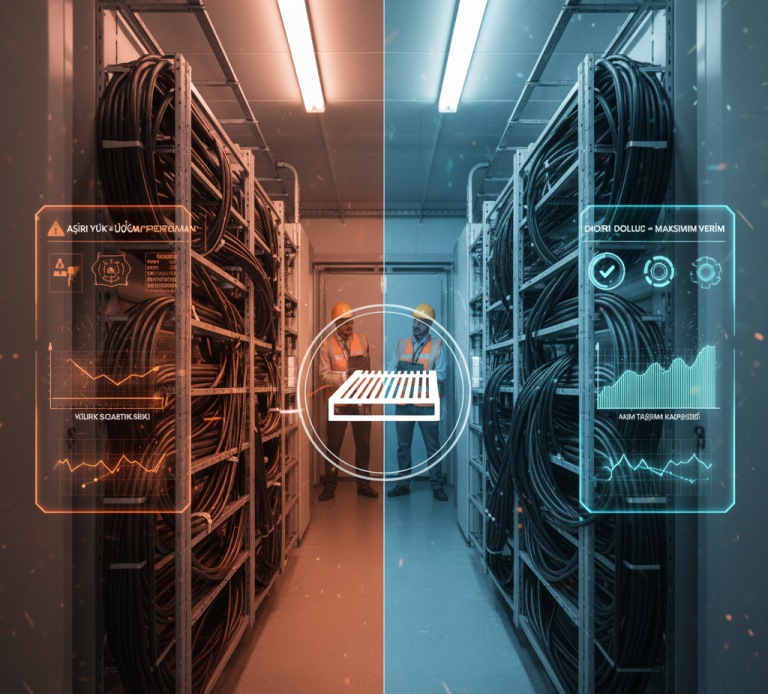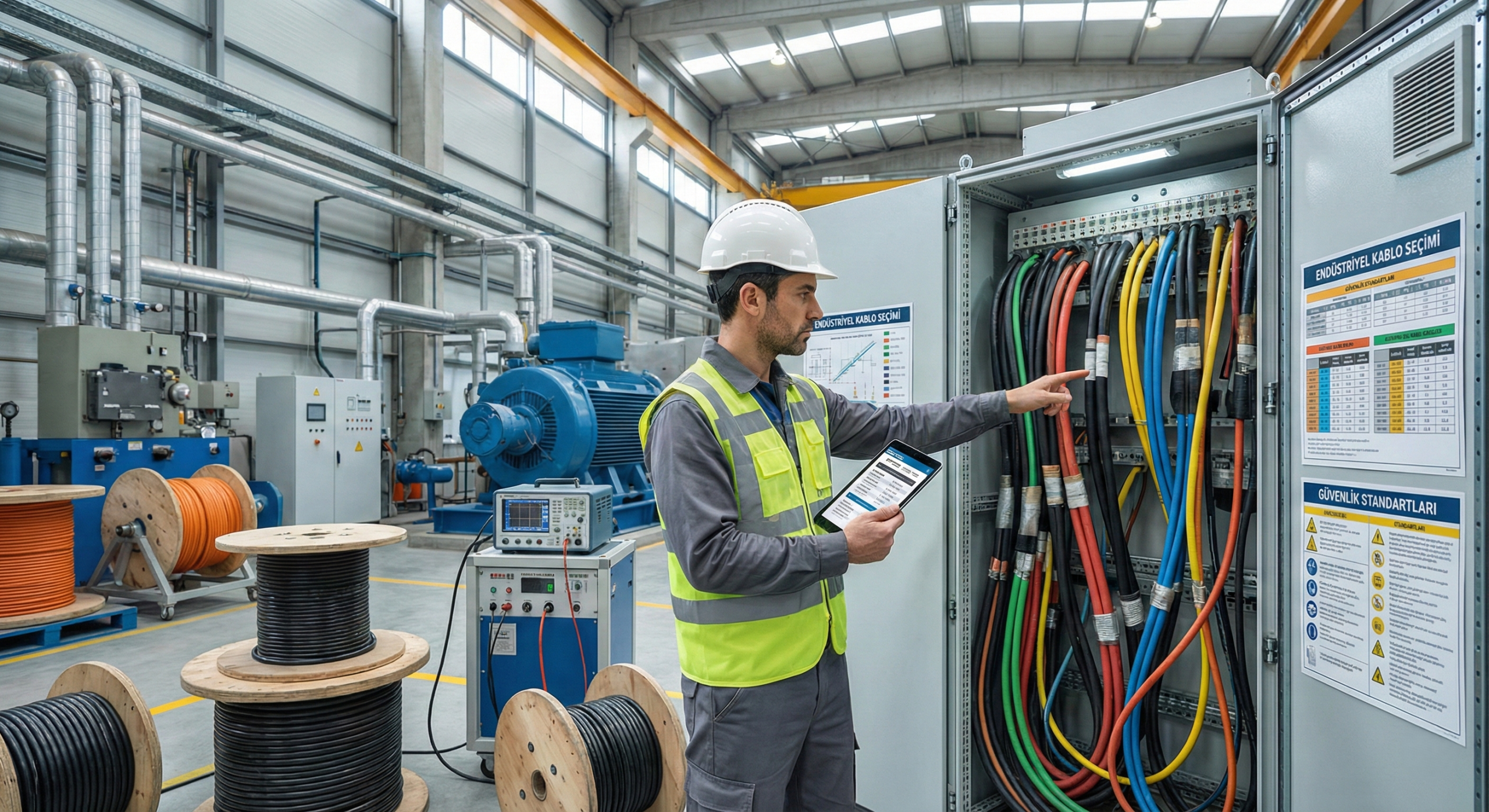
The electrical installation is undoubtedly the most critical infrastructure component of industrial facilities, factories, hospitals, and large-scale commercial structures. The cable infrastructure, which can be described as the heart of a facility, not only transmits energy but also plays a vital role in terms of fire safety, energy efficiency, and operational sustainability.
For project managers and purchasing officers, Industrial Cable Selection is a process of making the right decision amidst complex technical data and constantly updated regulations. Incorrect cable selection not only causes energy losses but can also turn into the biggest risk factor threatening life and property safety in the event of a possible fire.
As Delta Tema Electric, thanks to the strong partnership we have established with the industry’s leading brands Prysmian Cable and 2M Cable, we offer high-performance solutions for your projects that are compatible with legal regulations and optimized for your needs. In this guide, we will examine the technical criteria you need to pay attention to when selecting cables, the details of CPR (Construction Products Regulation), and the impact of using the right products on operating costs.
3 Basic Criteria in Industrial Cable Selection
Before creating a cable order for an industrial facility, it must be ensured that the project’s engineering calculations are done correctly. When determining the cable cross-section and type, the following three basic questions should be asked:
- What are the Environmental Conditions? Where will the cable be used? Is it a humid, hot, chemical-exposed environment, or a dry and cool indoor space?
- Is There Mechanical Stress? Will the cable be connected to a moving machine, or will it stand in a fixed tray? Is there a risk of impact?
- What is the Fire Risk and Human Density? How long would it take to evacuate people in a possible fire? Is the risk of toxic gas emission tolerable?
The answers to these questions determine the difference between a standard PVC cable and a high-tech Halogen-Free (HFFR) Cable.
Construction Products Regulation (CPR) and Euroclass Classes
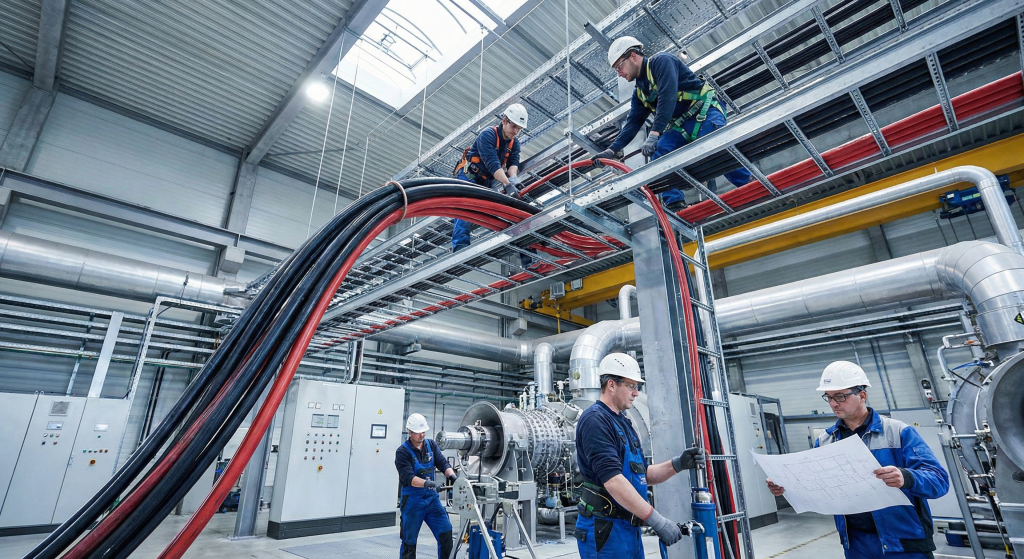
The Construction Products Regulation (CPR), which became mandatory in Turkey as of 2017, has created a revolution in the cable industry. Cables that used to be defined simply as “fireproof” are now tested in international laboratories and categorized into specific classes.
CPR measures the reaction of cables to fire in four main parameters:
- Heat release and flame spread.
- Smoke production (s).
- Flaming droplets/particles (d).
- Acidity (a).
Which Class Should You Choose for Your Project?
Especially in buildings with “high human density” such as hospitals, schools, shopping malls, and high-rise buildings, using standard Eca class cables is legally risky and insufficient in terms of life safety.
According to Fire Regulations and the EN 50575 standard, it is recommended to use at least Cca-s1d2a1 class cables in such structures. Prysmian and 2M Cable products in Delta Tema stocks have full certification in these classes and are delivered with Declaration of Performance (DoP) documents.
N2XH Cables: Why Prefer Them Over PVC?
The most frequently encountered question in industrial projects is: “Why should I use N2XH cable instead of the cheaper NYY (YVV) cable?” The answer lies in both safety and technical capacity.
N2XH cables have XLPE (Cross-Linked Polyethylene) insulation material. This material raises the operating temperature of the cable up to 90°C. Standard PVC cables operate at a maximum of 70°C. This 20-degree difference allows N2XH cables to carry more current with the same cross-section.
The Importance of Halogen-Free Structure
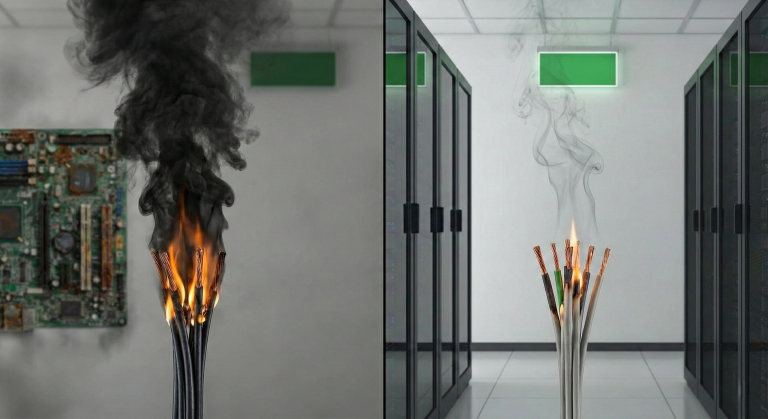
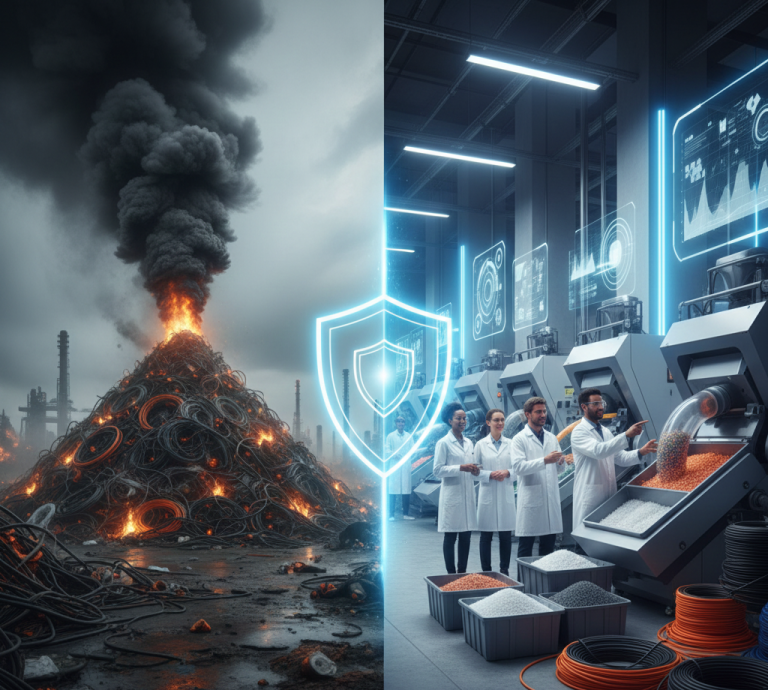
The outer sheath of N2XH cables is produced from “Halogen Free” material. While PVC cables emit dense black smoke and hydrochloric acid (HCl) gas during a fire, N2XH cables do not emit toxic gas and do not block visibility.
This feature not only facilitates the escape of people but also prevents sensitive electronic devices in the facility (servers, PLCs, medical devices) from corroding and breaking down due to acidic smoke. In other words, using N2XH is an insurance for both life and property.
Uninterrupted Power During Fire: FE180 and E90 Standards
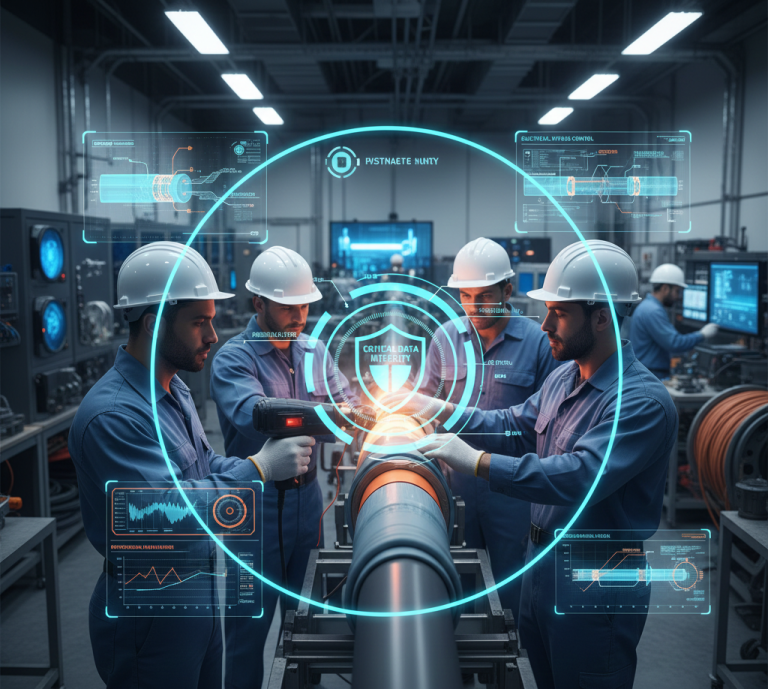
Some systems must never stop during a fire. Fire detection systems, emergency lighting, smoke extraction fans, and fire water pumps must work during the most critical moments of the building.
For these systems, Fire Resistant Cables (FE180) are used. However, there is a very important distinction here: FE180 and E90.
- FE180: Indicates that the cable maintains insulation integrity (conducts electricity) for 180 minutes under flame in a laboratory environment.
- E30 / E90: Indicates the fire resistance of the cable as a “system” together with the tray, clamp, and connection elements it is laid on.
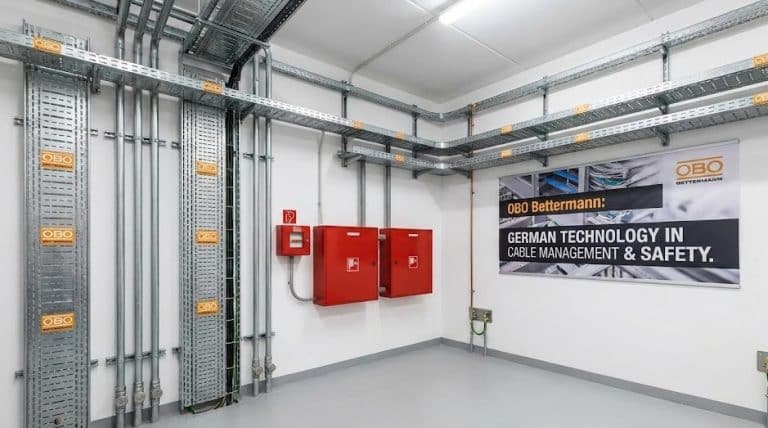
As Delta Tema, we always remind our customers: If you hang an FE180 cable on the ceiling with plastic dowels that are not fire-resistant, the tray will fall and the cable will break in the 10th minute of the fire. Therefore, it is a necessity to use certified mounting systems like OBO Bettermann together with the cable.
Correct Cable Cross-Section and Voltage Drop Calculation
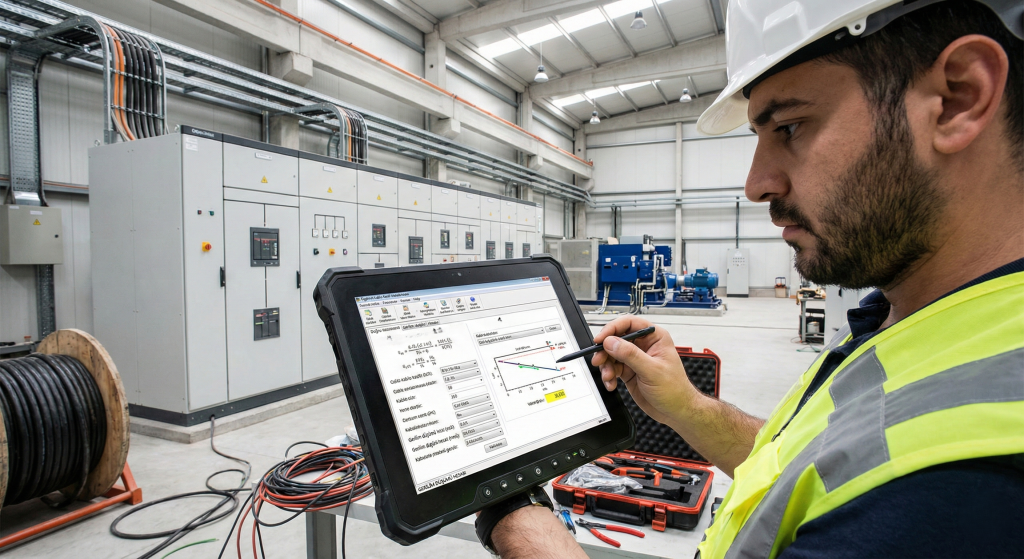
The biggest mistake made to reduce cable costs is selecting cable cross-sections at limit values. Looking only at the “Current Carrying Capacity” table when calculating cable cross-section is misleading.
The following factors (Correction Factors) must be taken into account in engineering calculations:
- Ambient Temperature: If the factory ceiling temperature reaches 50°C, the current carrying capacity of the cable decreases.
- Grouping (Side by Side Laying): If 10 cables go touching each other in the cable tray, heating increases and capacity decreases.
- Cable Length: As the distance increases, Voltage Drop increases. 400V coming out of the source should not come below 380V at the end of the machine.
If these calculations are not done correctly, cables overheat, insulation life shortens, and your electricity bill swells due to energy losses. The Delta Tema technical team provides engineering support for correct cross-section determination in your projects.
Brand Selection: Why Prysmian and 2M Cable?
Although a cable looks like a simple product from the outside, its technology is hidden in polymer chemistry. Substandard cables in the market, where copper ratio is stolen or poor quality plastic is used, may seem cheap in the short term but cause great damage in the long run.
Prysmian Group, as the leader of the world cable industry, sets the standards in fire safety with its developed AFUMEX technology. Patented sheath technologies save labor by ensuring easy stripping of the cable during assembly.
2M Kablo, with the power of domestic production, produces high-quality cables especially for industrial facilities, power plants, and petrochemical facilities. It is a brand you can safely use in your projects with its export-oriented quality and wide CPR certification network.
As Delta Tema Electric, the authorized distributor of these two giant brands, we offer the most suitable logistics and price advantages for your projects.
Conclusion: Safe Infrastructure, Sustainable Future
Cable selection in industrial facilities is not a detail, but the insurance of the investment. A correctly selected, CPR-compliant cable infrastructure with correct cross-section calculation and supplied from quality brands guarantees that your facility will operate smoothly for at least 30-40 years.
Do not leave fire safety to chance. Do not risk energy efficiency. You can contact our expert team to get technical support for your projects, reach current price lists, and query stock status.
Frequently Asked Questions
Q1: Where are N2XH cables used?
Answer: N2XH cables are used in indoor environments where human density is high and fire safety is critical, such as hotels, hospitals, shopping malls, schools, and industrial facilities. They are suitable for installation in cable trays or surface mounting.
Q2: Why is CPR certification important?
Answer: CPR certification proves that the cable’s fire performance has been tested by independent laboratories. It is a legal requirement in many regions and plays a vital role in insurance coverage processes in the event of a fire.
Q3: What is the difference between FE180 and E90?
Answer: FE180 refers to the insulation integrity of the cable itself (it conducts electricity for 180 minutes under flame). E90 refers to the fire resistance duration (90 minutes) of the entire system, including the cable, trays, and clamps, working together as a unit.