Cable Waste Management and Recycling is not just an environmental responsibility in today’s electrical and construction sectors, but also an operational necessity. Tons of cable waste are generated every year, and a large portion of this waste (especially those containing PVC) causes serious harm to human health and the environment if not disposed of correctly. In this era of accelerating transition to the circular economy model, Cable Waste Management and Recycling strategies are vital for a project to obtain “green” certification and protect its long-term investment value.
In this comprehensive guide, we will examine the details of the Cable Waste Management and Recycling processes, the environmental impact of waste, the global commitments of brands like Prysmian and 2M Kablo in this area, and how you can make your projects responsible with the solutions we offer at Deltatema.
Why is Cable Waste a Critical Environmental Problem?
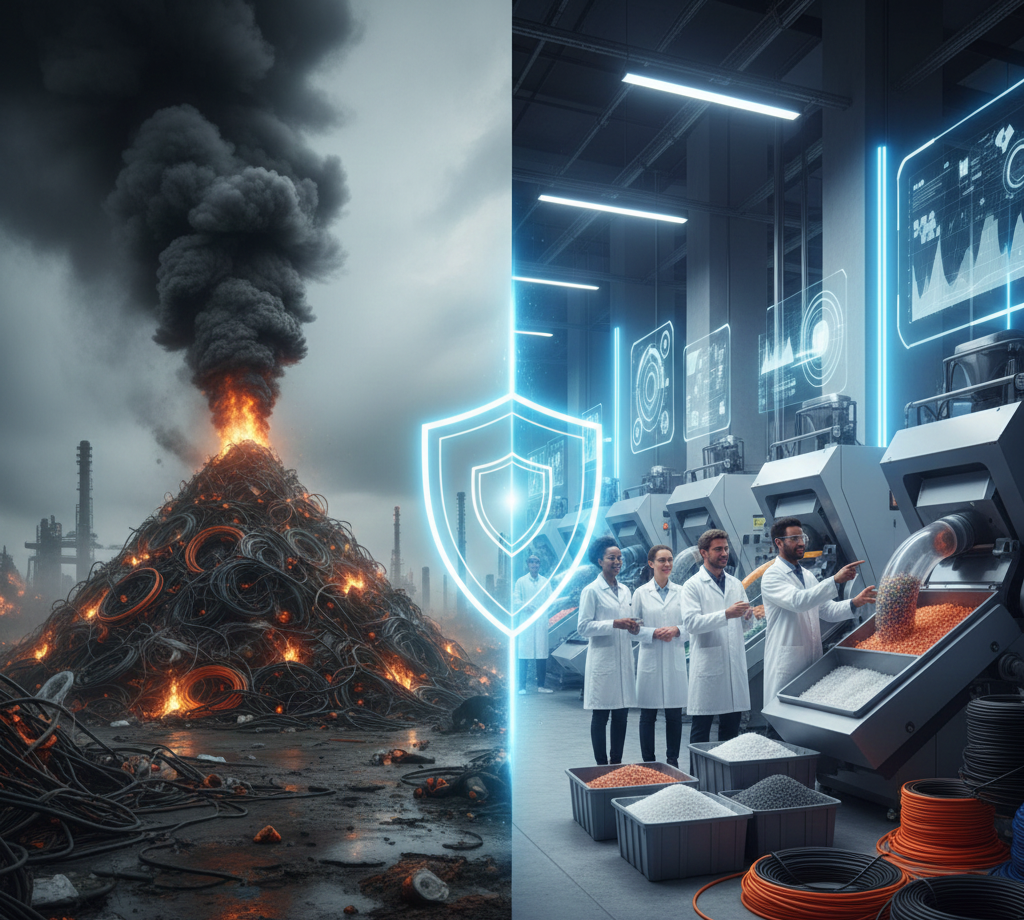
Cable waste contains valuable metals (copper and aluminum) as well as plastic and polymer materials that pose environmental risks. There are two main reasons why cable waste is critical:
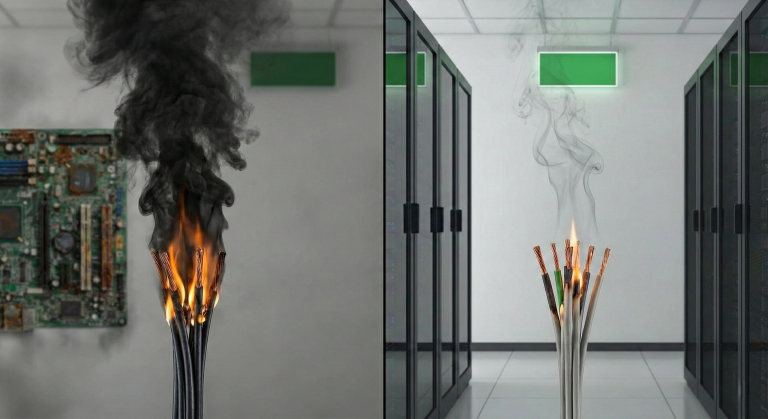
- PVC and Halogen Emission: Traditional PVC (Polyvinyl Chloride) insulated cables, when burned or landfilled, release poisonous dioxins and corrosive hydrogen chloride (HCl) gas. This not only increases air pollution but also threatens human health. Therefore, the use of halogen-free cable (HFFR) is encouraged.
- Loss of Valuable Resources: Cables contain high-purity copper and aluminum. Recycling these metals consumes much less energy than the initial mining process and contributes to the conservation of natural resources.
The Recycling Process and Financial Benefits
Cable Waste Management and Recycling is not just an environmental necessity but also a smart financial strategy that reduces the total cost of ownership (TCO) of a project.
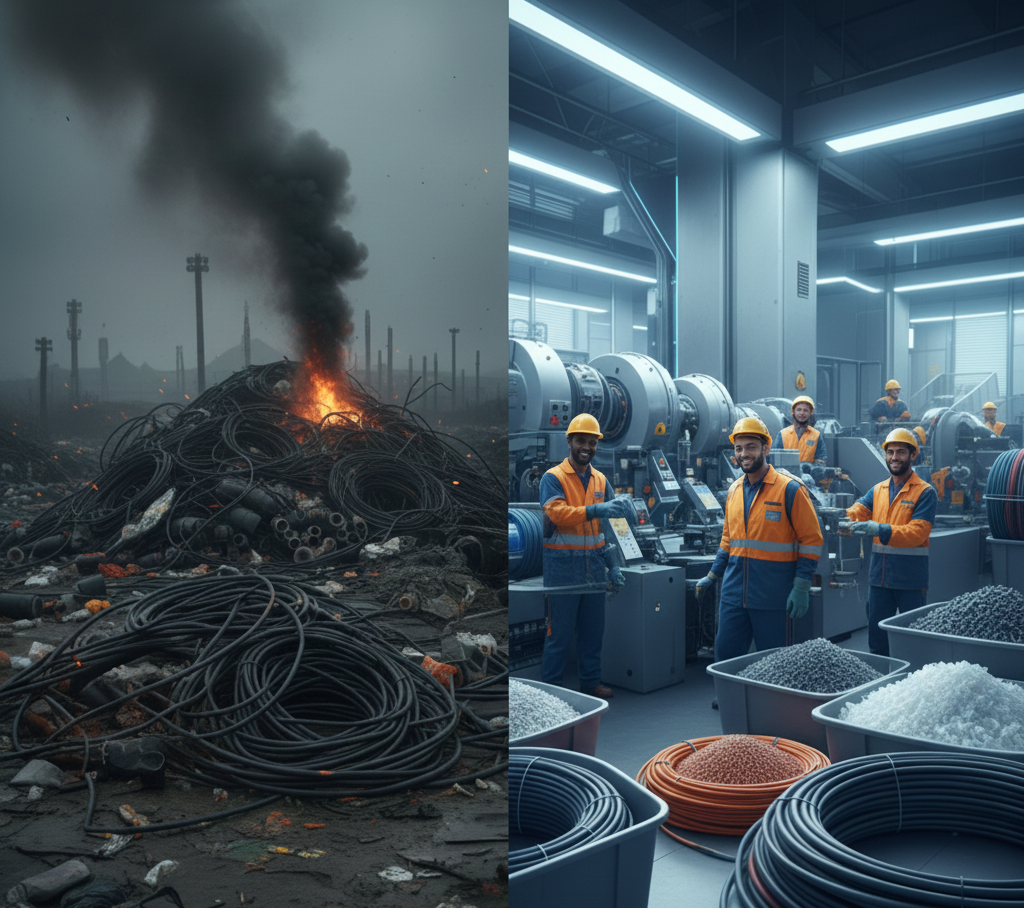
Stages of Recycling
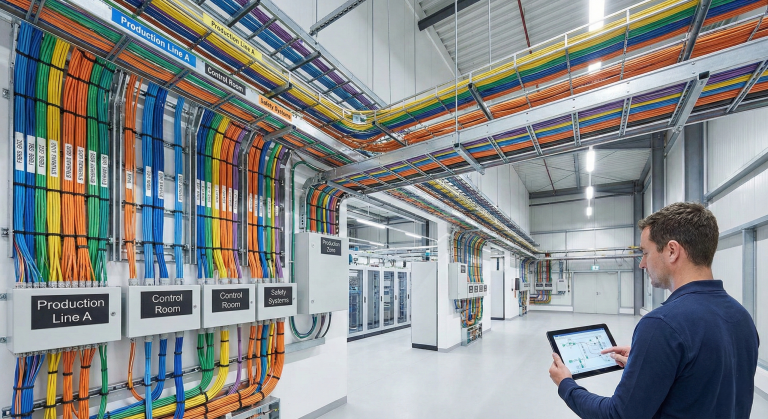
- Collection and Classification: Collection of waste cables and separation according to the insulation type (PVC, XLPE, HFFR).
- Shredding and Separation: Mechanical separation of the cable’s outer sheath, insulation, and conductor. In this stage, copper and plastic fractions are separated using high-tech separators.
- Reuse as Raw Material: The separated copper and aluminum are returned to the system as high-purity raw material for the production of new cables or other industries.
This process increases the value of a long-term investment by converting the project’s waste into resources.
The Sustainability Commitment of Prysmian and 2M Kablo
Industry leaders assume a pioneering role in Cable Waste Management and Recycling.
- Prysmian’s Global EHS Approach: Prysmian Group manages the impact throughout the cable’s lifespan with its environmental, health, and safety (EHS) programs. Prysmian commits in its sustainability reports to the recyclability of its products and the use of green energy in production. This makes Prysmian a reliable partner in the supply of sustainable electrical cables.
- 2M Kablo and Product Safety: 2M Kablo, leveraging the strength of domestic production, reduces environmental risk before waste even occurs, especially with its halogen-free cable (HFFR) series. Such cables also facilitate recycling processes by creating a cleaner waste stream than PVC.
Responsible Supply Chain with Deltatema
At Deltatema, we do not leave our customers alone in the Cable Waste Management and Recycling process. The 2M Kablo and Prysmian products we supply adhere to the highest standards for recyclability.
- Expertise and Logistics: While supplying high-performance cable products (e.g., N2XH) to meet your project’s critical infrastructure needs, we also offer consulting services for the management of waste generated at the end of the project and referral to relevant recycling companies.
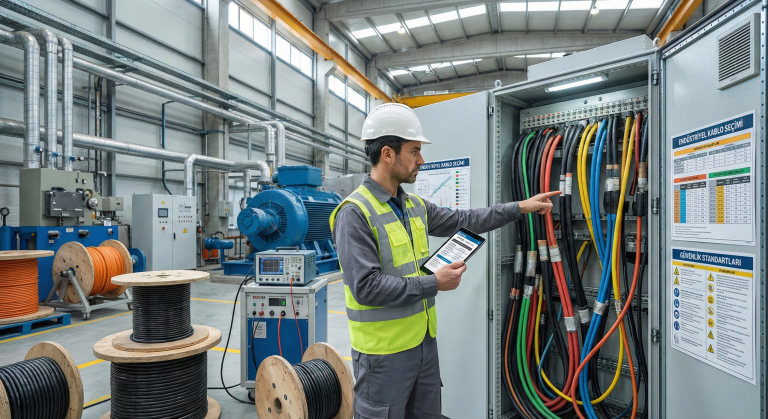
- Correct Material Selection: The first step of a long-term investment is avoiding materials that are difficult to recycle or that generate hazardous waste. Deltatema always prioritizes environmentally sensitive cable types like HFFR and XLPE.
Conclusion
Cable Waste Management and Recycling is not just a trend, but an indicator of the right choice for electrical projects. By preferring the quality of Prysmian and 2M Kablo, you ensure that your projects are future-ready in terms of both safety and environmental responsibility.