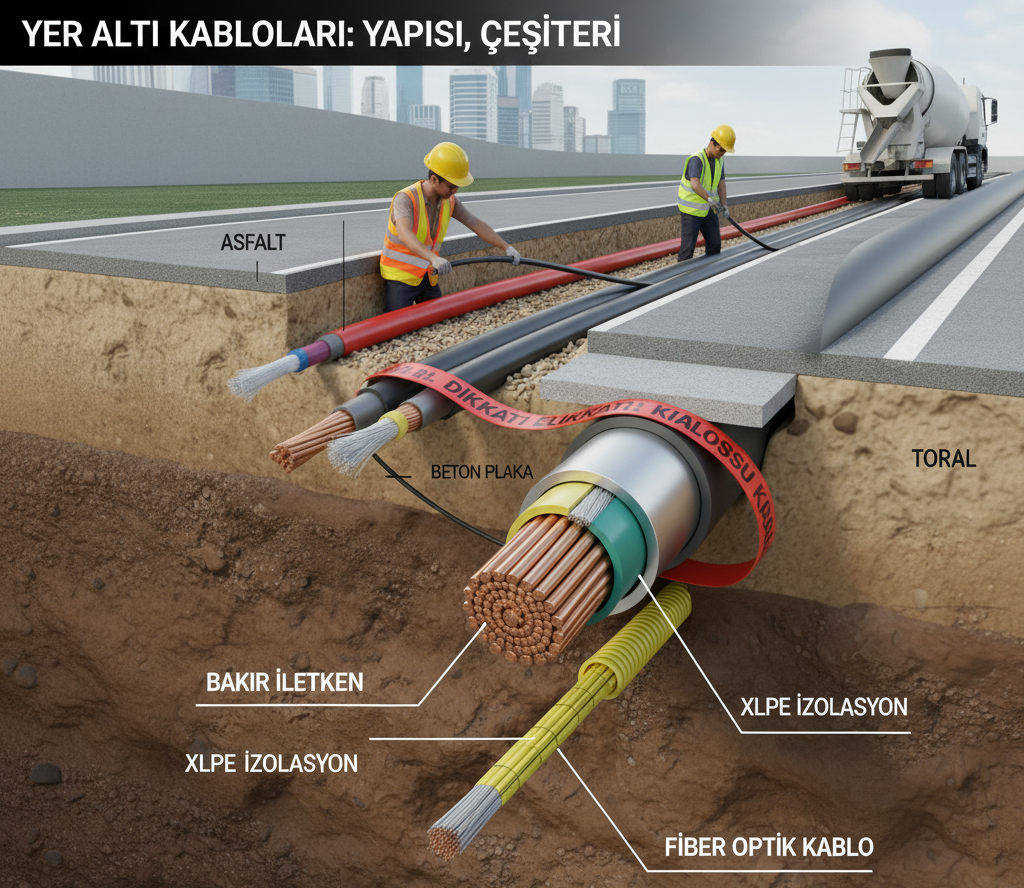
The answer to What Are Underground Cables symbolizes reliability, invisibility, and functioning independently of adverse weather conditions in energy transmission. Power lines must proceed without affecting the aesthetics of cities, without being influenced by natural events, and under the highest safety standards. For this reason, energy and communication networks have largely shifted from overhead lines to solutions like underground electric cable or buried wiring. The question of What Are Underground Cables, what they do, and how to select them correctly forms the foundation of every electrical project.
In this comprehensive guide, starting with the question What Are Underground Cables, we will examine the structural types (armoured/unarmoured), classification by voltage type, and the solutions we offer at Deltatema with brands like Prysmian and 2M Kablo.
Why Are Underground Cables Mandatory?
Underground cables possess several critical advantages over overhead lines:
- Immunity to Adverse Weather Conditions: There is no risk of power outages due to weather events like snow, wind, or storms.
- Safety: The absence of risk from breaking, falling, or external contact increases the safety of life and property.
- Architecture and Aesthetics: They eliminate the clutter of poles and wires that spoils urban aesthetics.
- Longer Lifespan: Due to protection from external factors, the lifespan of an underground electric cable is much longer.
Structure and Types: Why Armor is of Vital Importance
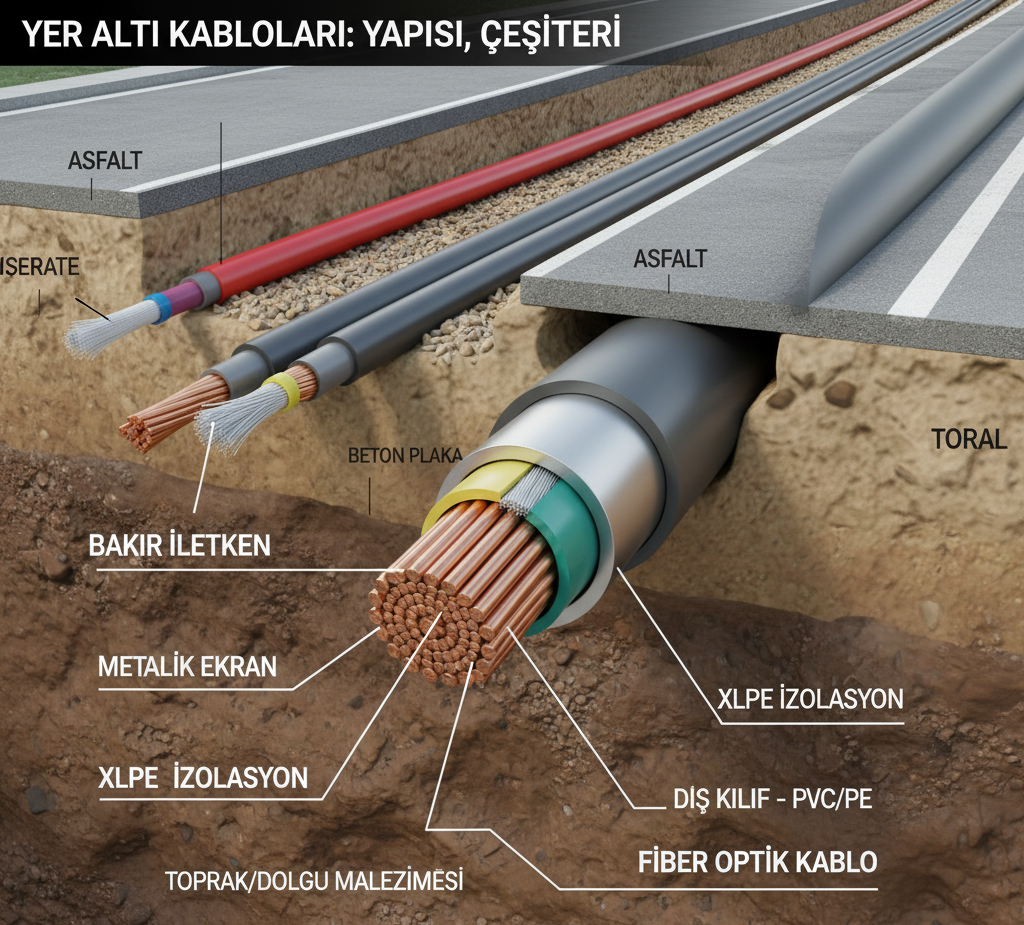
The answer to What Are Underground Cables is hidden in the protective layers within the cable’s structure. Underground cables are classified according to their voltage ratio (Low, Medium, High Voltage) and their structural features.
Fundamental Layers of Cable Structure
An underground cable generally consists of these components:
- Conductor: The copper or aluminum part that carries energy. Stranded conductors provide flexibility.
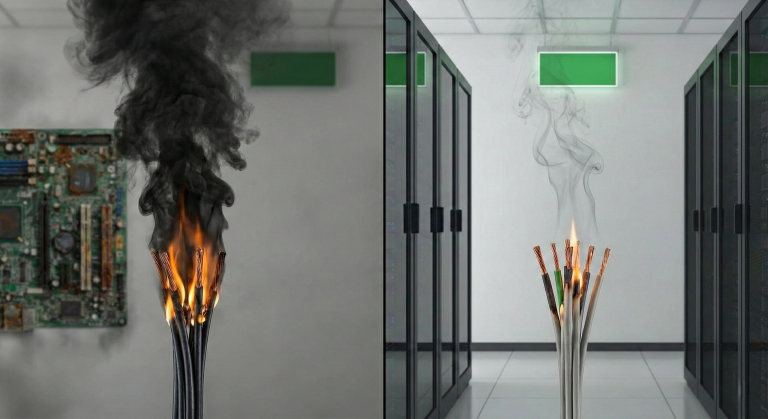
- Insulation: Materials like XLPE (Cross-Linked Polyethylene) or PVC are used. XLPE offers higher temperature resistance and thus a higher current carrying capacity.
- Armor (Optional): The layer of steel wire or tape that protects the cable against stones, soil movements, and rodents. Unarmoured cables (e.g., NYY or N2XY) are generally used inside conduits or cable trays.
Cable Cross-Sections and Current Calculation
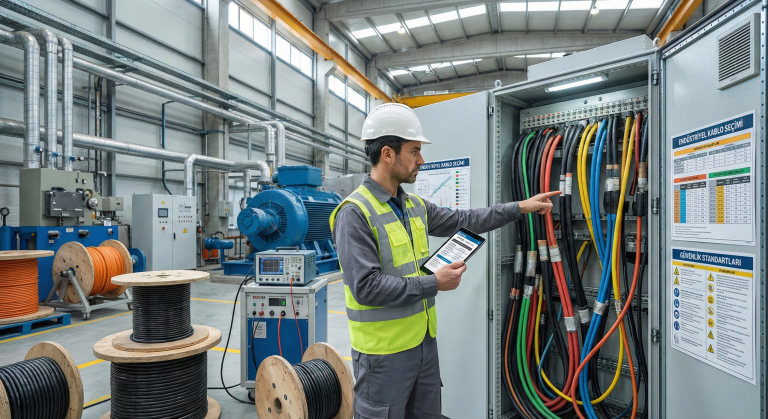
The most critical technical question in underground cabling, before asking “how many kW does 4×6 cable draw” or the “price of 4 x 10 underground cable,” is what the correct cable cross-sections and current carrying capacities should be. The current carrying capacity (Iz) determines the maximum current a cable can safely carry, and this depends not only on the cable thickness but also on the laying method, ambient temperature, and the cable’s insulation type. For example, even if the price per meter of 6 mm cable is attractive, using it without the correct calculation increases the fire risk. At Deltatema, we provide technical support to determine the most suitable cross-section for your project’s needs.
Regulations, Trenching, and Installation Details
The longevity and safety of underground cables largely depend on full compliance with underground cable laying regulations.
- TEDAŞ Underground Cable Laying Specification: Full compliance with the depths (from 40 cm to 120 cm, depending on the voltage ratio) and procedures determined by the TEDAŞ underground cable laying regulations is mandatory for project acceptance and long-term safety.
- Trench Details: The process of underground cable trench excavation and filling requires technical knowledge. The bottom of the trench must be firm and stone-free, and the cable must be surrounded by sand or sifted soil (cable duct detail). The side width of the trench and the distance between cables are also determined by regulation. Incorrect trench filling can lead to mechanical damage to the cable.
- Protection: Cables must be protected against mechanical damage with conduits or bricks, and red warning tape must be placed over them.
Underground Solutions from Prysmian and 2M Kablo
At Deltatema, we offer high-standard products from Prysmian and 2M Kablo in underground cabling solutions. These brands maximize the cables’ resistance to moisture, chemicals, and mechanical impacts.
- Armoured Cables: We offer armoured underground cable solutions that are suitable for direct burial and provide extra protection against impacts.
- Communication Cables: In addition to power cables, we also have Prysmian products for fiber cable solutions, which are increasingly common in underground infrastructure, in our portfolio.
Conclusion
The question What Are Underground Cables means “hidden power and safety.” Underground cables satisfy all your project’s requirements, from aesthetics to safety, from uninterrupted energy transmission to long-lasting critical infrastructure. At Deltatema, we are proud to offer the most correct underground cabling solutions with certified products from brands like Prysmian and 2M Kablo. For more information, you can consult our experts and the T.R. Ministry of Environment and Urbanization legislation.